

Time alone can be a chance to follow your own interests, rest or try something small without coordinating everyone’s preferences. It does not need to become a dramatic solo adventure or another self-improvement project. Choose an idea that fits the time, money, energy and access you have today. You can enjoy company too, and you do not have to prove that you are independent by finding every moment alone comfortable.
In this article
Start with something simple at home
You do not need a free afternoon or a perfectly quiet house. A short activity with a clear stopping point can be enough.
- Read a short chapter. Pick something you want to read rather than a book you feel obliged to finish. A poem, article or audiobook can suit a shorter break.
- Listen to music. Choose a few familiar songs or explore an album. You can listen attentively, move around or simply have it in the background.
- Make food you enjoy. Prepare something familiar or try a modest variation using what you have. Cooking for one does not need to mean an elaborate recipe.
- Write a few lines. Note what has been taking your attention and what you would like more room for. You do not need a beautiful journal or an answer to every question.
Enjoy an outing on your own terms
If you want to go out, give the plan a manageable shape. Check current opening times, costs, transport and accessibility before setting off.
- Visit a museum or gallery. Choose one exhibition or a few objects to look at closely. You are allowed to leave before seeing everything.
- Spend time at a library. Browse a subject you are curious about or read in a comfortable spot. Check what is available locally rather than assuming every service is free or accessible.
- Take a small café break. If it suits your budget, have a drink somewhere you feel comfortable. Dining alone is an ordinary choice, not a test of courage.
- Attend a daytime event. A talk, community exhibition or short performance might suit your interests. Choose the level of social contact and time commitment you actually want.
Notice familiar surroundings
Keep outdoor plans suited to your experience, local conditions and access needs. Solitude does not require an isolated place or an unfamiliar route.
- Take a familiar short walk. Choose a route and return time you can manage. The point can be noticing your surroundings rather than covering a particular distance.
- Sit in a park or garden. Bring something comfortable if useful and choose a place that feels suitable for you. A brief visit can be a complete outing.
- Watch the light change. Notice sunrise, sunset or the afternoon light from a window or another convenient place. There is no need to travel to a special viewpoint.
- Observe birds or plants. Choose a few details to look for from an accessible spot. Curiosity is enough; you do not need to identify everything correctly.
Make or explore something for its own sake
An activity can be worthwhile because you enjoy it. You do not need to turn it into a skill, product or public post.
- Sketch an ordinary object. Use the materials you already have. A mug, leaf or view from your seat gives you somewhere to begin.
- Arrange a small personal space. Move a few items on a shelf or make a favourite chair easier to use. Keep the project contained enough to put things back.
- Try a short learning exercise. Practise a few words in a language or read about a topic you have wondered about. Stop without requiring yourself to master it.
- Sort a few photographs. Choose an album or collection you would like to revisit. Keep private pictures private, and pause if the memories are more difficult than expected.
Leave room for rest and connection
- Plan one small outing. Choose something you might enjoy later and work out the practical details. Planning can stay provisional.
- Return to an old hobby. Try a small part of it using available materials. You can discover that your interests have changed without treating the attempt as wasted.
- Rest without filling the gap. Sit, lie down or enjoy a quiet drink. Time alone does not have to produce a result.
- Choose how to reconnect. Decide whether you would enjoy a message, call or shared activity afterwards. Having time alone and wanting company can belong in the same day.
Chosen solitude and unwanted loneliness can feel different. If you want more connection, the NHS guidance on loneliness includes options such as talking with someone or trying an interest-based group. You do not need to complete a solo-activity list before asking for company or support.
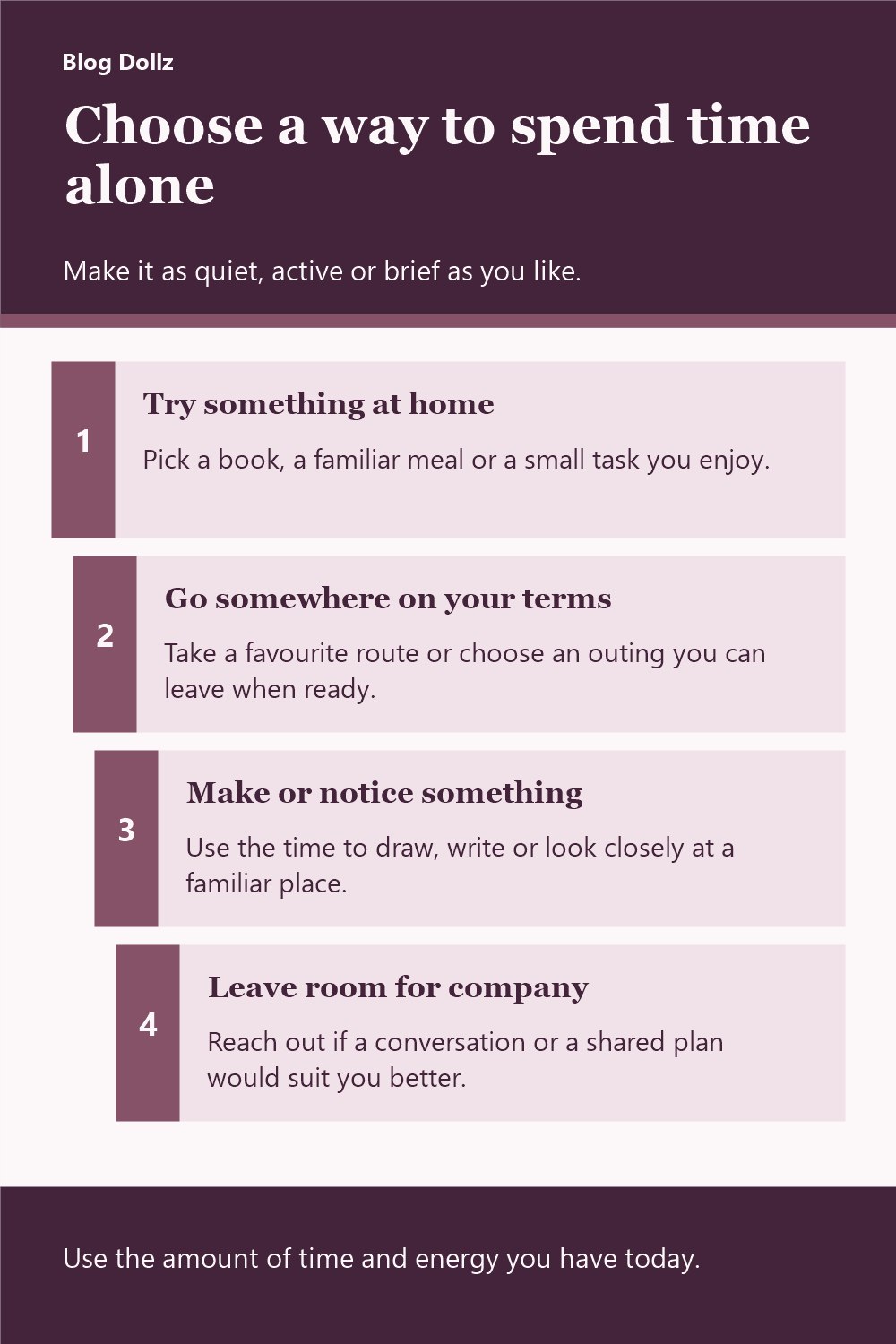
Read the infographic in text
Choose a way to spend time alone Make it as quiet, active or brief as you like.
- Try something at home Pick a book, a familiar meal or a small task you enjoy.
- Go somewhere on your terms Take a favourite route or choose an outing you can leave when ready.
- Make or notice something Use the time to draw, write or look closely at a familiar place.
- Leave room for company Reach out if a conversation or a shared plan would suit you better.
Use the amount of time and energy you have today.