

Feeling insecure can mean doubting a decision, worrying about how other people see you or feeling unsure where you belong. You do not have to become completely confident before making a choice, asking for care or trying something that matters to you.
A useful starting point is to identify the situation that feels difficult. Is there a practical problem to address, a harsh judgment you keep repeating or a conversation you need support to have? Different problems may need different kinds of help. Choose one part to work with rather than making confidence another demand on yourself.
On this page
Separate your worth from confidence
You can feel nervous and still have something to contribute. You can make a mistake and remain deserving of respect. Helping other people or doing well at a task may be satisfying, but you do not need a list of achievements to earn basic care.
Consider what is making the day harder before deciding you need a different attitude. You may need a meal, rest, clearer instructions, practical assistance or less pressure. Money, health, discrimination and unsafe circumstances cannot always be resolved by changing your thoughts. Your needs are worth considering even when the available options are limited.
Notice when insecurity shows up
Choose a recent example. Perhaps you hesitated to ask a question at work, assumed a friend was annoyed or compared your life with somebody’s social media posts. Name the event and the conclusion you drew from it separately.
“My friend has not replied” describes what you know. “Nobody wants to hear from me” adds an explanation you may not have evidence for. Try a more balanced statement: “I do not know why they have not replied. I can carry on with my evening and decide later whether to check in.” You do not need to replace every worry with an enthusiastic affirmation.
If comparison makes things harder, consider a small change to when or how you use a particular app. You might also contact someone whose company feels comfortable. A shorter conversation or a familiar activity may fit better than forcing yourself into a large gathering.
Ask for changes and protect your limits
Confidence is not a requirement for saying that something does not work for you. A clear request might be, “Please give me feedback about the task without joking about my ability,” or “I need to check my schedule before agreeing.” You can practise the words privately or write them down first.
Notice the response as well as your own feelings. Someone else’s repeated insults, pressure or mistreatment are not caused by your lack of confidence. You do not have to become more resilient before taking that behaviour seriously.
Changing contact or leaving a harmful situation can involve housing, money, children and safety. If you are afraid of someone’s reaction, seek private support from someone trustworthy or a local specialist service before announcing a plan. You can also make room for interests, friendships and quiet time that belong to you, within what is currently workable.
Practise one manageable step
Choose something you want to do and make the first attempt small enough to be realistic. The aim is to learn what helps, rather than to prove that you never feel anxious. For example:
- Prepare one question before a meeting and decide when you could ask it.
- Send a brief invitation to someone you would enjoy seeing.
- Try a short beginner session of an activity that interests you.
- Ask for the information or assistance you need to start a task.
Afterward, consider what happened, what was difficult and what you would change. An awkward moment or a declined invitation does not make the attempt worthless. You can adjust the task, ask for support or decide that this particular activity is not for you.
Choose support that fits
If self-doubt is persistent, distressing or making daily life difficult, consider talking with a healthcare professional or a qualified therapist. You can ask about experience with your concern, registration where applicable, fees and confidentiality before deciding whether to continue.
Books, podcasts and self-help articles can offer ideas, but a promise of instant confidence is worth questioning. Choose one suggestion you understand and can adapt to your circumstances. Taking a break from advice can also be useful when it starts to feel like a long list of personal failings.
When speaking to a friend, be specific about the help you want: “Could you listen while I work out what to say?” or “Would you come with me the first time?” Reassurance can be welcome without needing someone to approve every decision.
You may find it useful to notice skills, values or qualities you appreciate in yourself. Keep the examples believable. “I asked for clarification” may feel more useful than insisting that you are brilliant at everything.
The NHS guide to low self-esteem suggests examining harsh beliefs, recognising strengths, building supportive relationships and treating yourself with kindness. It also describes talking therapies as an option when you need more help.
Strong feelings do not establish that you have experienced childhood trauma or reveal a single hidden cause. You can explore what has affected you with appropriate support, at your own pace, without having to adopt an explanation that does not fit.
Choose what would help today
Finish with one practical question: “What would make this situation a little more workable?” The answer might be a clearer agreement, a smaller task, a rest or a conversation. Confidence can vary while you keep making choices. You deserve support on the uncertain days as well as the confident ones.
Read the infographic in text
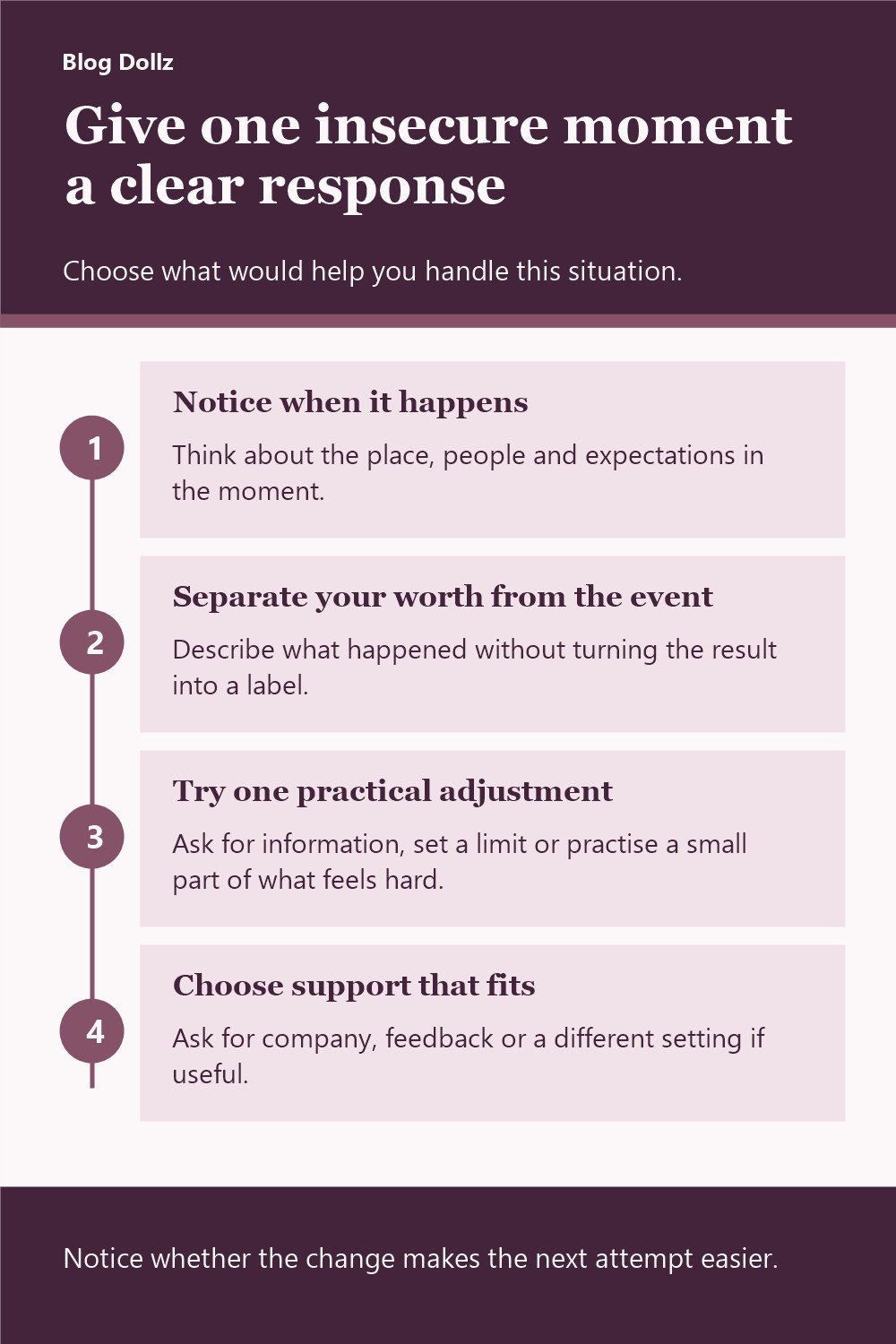
Give one insecure moment a clear response Choose what would help you handle this situation.
- Notice when it happens Think about the place, people and expectations in the moment.
- Separate your worth from the event Describe what happened without turning the result into a label.
- Try one practical adjustment Ask for information, set a limit or practise a small part of what feels hard.
- Choose support that fits Ask for company, feedback or a different setting if useful.
Notice whether the change makes the next attempt easier.