

After a breakup, familiar routines and plans may no longer fit. You may wonder what you enjoy on your own or which friendships still feel like yours. Uncertainty does not mean you have no identity; it may mean important parts of daily life are changing.
Name what changed and what remains
Separate the loss of the relationship from the loss of particular routines, roles or plans. You might miss the person, a shared home, a familiar weekend or the future you imagined. Each can need a different kind of adjustment.
Qualities such as kindness, humor, curiosity and persistence were not created by the relationship. They remain available even when you do not feel confident. Ask where you see one of them in an ordinary action now.
Start with low-stakes choices
You do not need a dramatic reinvention. Choose a meal, a route, a film or a small activity because it suits you. These decisions give you information about preferences without turning recovery into a performance.
If you are managing housing, money, parenting or legal responsibilities, those practical needs may take priority. Rebuilding identity can happen in small moments alongside necessary work.
Use keep, change and explore
- Keep: Which friendships, interests, values and routines still support me?
- Change: Which arrangements no longer fit my circumstances?
- Explore: What small experience would I like to try without committing to a new identity?
For example, you might keep a weekly walk, change who you contact about household tasks and explore a class. You can revise any category later. The exercise is a prompt, not a requirement to find a positive meaning immediately.
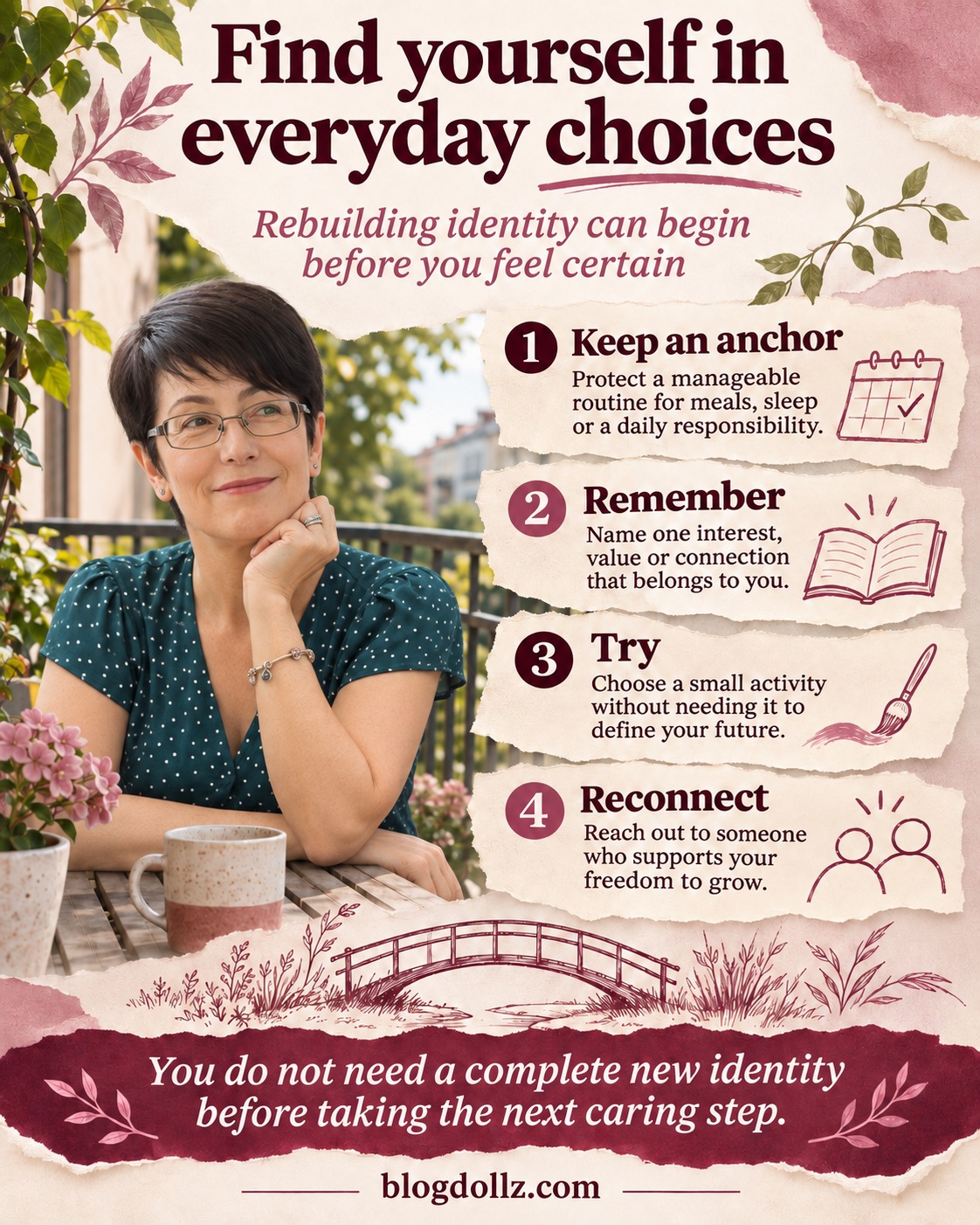
Read the visual guide as text
- Keep an anchor. Protect a manageable routine for meals, sleep or a daily responsibility.
- Remember. Name one interest, value or connection that belongs to you.
- Try. Choose a small activity without needing it to define your future.
- Reconnect. Reach out to someone who supports your freedom to grow.
You do not need a complete new identity before taking the next caring step.
Take your time with memories
Photos, gifts and familiar places can bring mixed feelings. You do not need to delete everything or keep everything visible. A temporary, private storage decision may be enough while you work out what you want.
If possessions or communication involve shared responsibilities, follow appropriate agreements and advice. Avoid using a symbolic clearing ritual as a reason to discard someone else’s property or ignore an obligation.
Learn without making the breakup your whole story
You can ask what worked, what hurt and what you would want to handle differently. Keep responsibility specific. Regretting one choice does not mean you caused every difficulty or should accept mistreatment.
Try: “I want to speak sooner when a plan does not work for me,” rather than “I am bad at relationships.” Spiritual reflection can help you explore meaning, but it cannot establish an ex-partner’s private thoughts or tell you that contact is required.
Let ordinary life become part of the next chapter
Food, sleep, movement you can manage, practical help and contact with trusted people matter during adjustment. Some days may contain grief and an enjoyable moment together. That does not invalidate either experience.
You can choose to date, wait or reconsider later. Readiness is not proved by a calendar or by feeling completely healed. Ask whether you have space for the kind of connection you want and can state your limits honestly.
If distress persists, worsens or makes daily needs difficult to manage, seek appropriate support. If there were threats, coercion or abuse, prioritize individualized safety advice. You do not have to turn the breakup into a lesson before receiving care.
Your life can contain more than recovery. Begin with one choice that belongs to you and is manageable in the circumstances you have today.