

Self-trust after a breakup can grow through everyday decisions that make room for your needs. Start by noticing one time you agreed before you were ready and choose what you want to do next time.
What self-trust can look like after a breakup
Self-trust is easier to practice when it means something you can see. You can notice your need, consider what you know, make a choice, and then look at it. You don’t have to feel certain at every stage.
A feeling can be important without it being an explanation. A decision can be thoughtful and still be disappointing. Trusting yourself means having the ability to look at new information.
Look at the pattern with care
Pick one situation instead of looking at the whole relationship at once. What did you see? What did you need? What did you do?
You might say something like, “I wanted to rest, but I agreed to another late-night visit because I was worried about having an argument.” This identifies the need and the pressure. This is better than saying, “I was foolish and weak.”
According to the NHS guidance on raising self-esteem it encourages a fairer view of yourself and the beliefs you hold. Fairness can include responsibility where appropriate without ignoring the circumstances. You can wish you had acted differently and still understand why it was hard. A useful review should create options for the future, not a harsher story about the past.
Give a need a practical name
After a relationship ends, it’s easy to focus on everything you wanted your former partner to do differently. Maybe you wanted more affection, better communication, or someone who made you feel like a priority. But sometimes it helps to think about the needs behind those wishes instead of focusing only on the person you hoped would meet them.
Think of a woman named Lauren was dating someone who rarely made plans with her and often went several days without contacting her. She frequently asked for more communication, but nothing really changed. After the relationship ended, Lauren started wondering if she had expected too much or if she should have been more understanding.
As she thought about what happened, she realized that wanting someone who communicates regularly and follows through with plans wasn’t unreasonable. Those were things that mattered to her in the relationship. But she also understood that her former partner wasn’t willing or able to give her the kind of consistency she wanted.
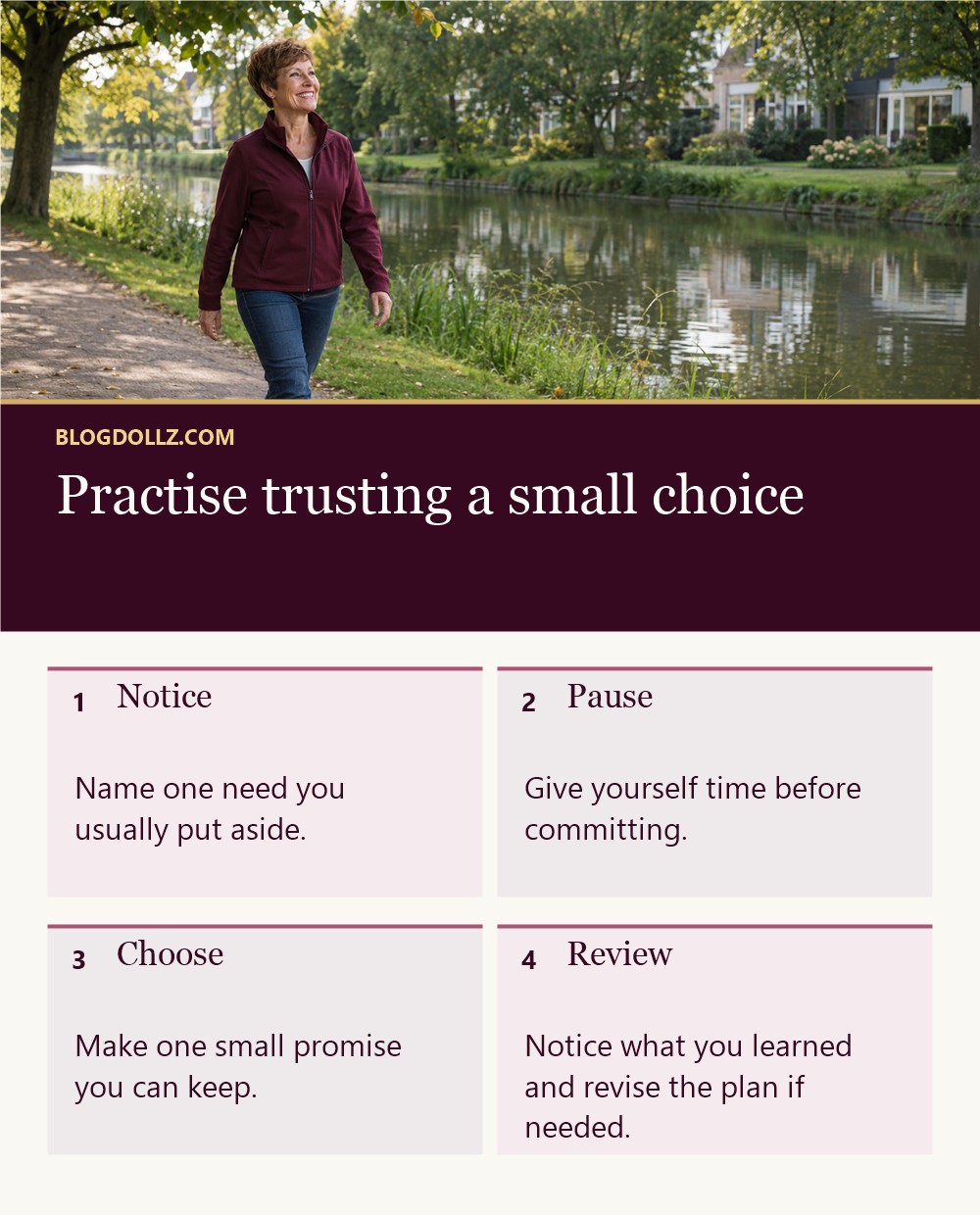
Read the visual guide as text
- Notice. Name one need you usually put aside.
- Pause. Give yourself time before committing.
- Choose. Make one small promise you can keep.
- Review. Notice what you learned and revise the plan if needed.
Make a small promise you can keep
Pick one promise that fits your resources. You could say something like, “I’ll check my schedule before I start a new plan.” This can be more useful than promising to put yourself first forever.
Say what you’re going to do. Maybe you’re going to prepare a meal before you go out, keep an appointment, or stop before you answer a request. Allow room for emergencies and changing situations.
If a commitment keeps getting missed, look at the plan. Was the plan too clear, too large, unsupported, or not very important to you? Don’t respond by making bigger promises. A good adjustment can show care for yourself instead of demanding that you be perfect. The aim is a pattern of responding to your needs, not an unbroken streak that falls apart after a hard day.
Give yourself room to answer later
Sometimes it’s easy to agree to something before you’ve had a chance to think about what you’re actually being asked to do. Maybe someone needs a favor, invites you somewhere, or asks you to take on another responsibility. You might say yes because you don’t want to disappoint them, even though you’re not sure if you have the time or energy to follow through.
Instead of feeling like you have to answer immediately, try giving yourself a little time to think. You could say, “Let me check my schedule and get back to you,” or “I need to think about that before I make a decision.” If the other person needs an answer by a certain time, you can let them know when you’ll respond. This gives you an opportunity to consider what agreeing would actually involve and if it’s something you’re comfortable doing.
Think about a woman named Amanda is asked to help organize a family celebration. She usually agrees to help with these things, but this time she already has several responsibilities at work and home. Instead of immediately saying yes, Amanda decides to look at her schedule first. After thinking about it, she realizes that she could help with decorations but wouldn’t have enough time to plan the entire event.
Choose a boundary you can follow through on
Setting boundaries is an important part of taking care of yourself and building healthy relationships. But boundaries aren’t about controlling what other people do or expecting everyone to behave exactly how you want. They’re about deciding what you’re comfortable accepting and what you’ll do when something crosses a line.
If someone regularly raises their voice or insults you during disagreements, you might say, “I’m willing to talk about this, but I’m not going to continue the conversation while I’m being yelled at. We can talk again when things are calmer.” This makes your expectations clear while focusing on what you can control, which is your own participation in the conversation.
The same idea applies to other situations in your everyday life. Maybe someone frequently asks to borrow money, but you’re trying to manage your own expenses. Instead of making excuses every time they ask, you could explain that you’re not in a position to lend money. You don’t need to share every detail of your finances or give a long explanation to make your decision reasonable.
Repair a decision that went wrong
If a choice doesn’t work, figure out what you knew at the time and what was clear later. Hindsight can make uncertainty go out of the story, but it was part of your original decision.
Ask what it is now in your control. You might need to change a plan, apologize, get advice, or stop an arrangement. Look at the action instead of the verdict about your own judgment.
Bring your preferences into future relationships
You don’t have to tell someone you’re dating your whole history to say something like, “I like making plans in advance,” or “I want a relationship where we could talk about our differences in a respectful way.”
When you talk about what you need, pay attention to how the person responds as time goes on. Can they ask questions, disagree in a kind way, and respect your limits?
Don’t require yourself to identify every incompatibility right away. Getting to know someone means that you’re learning about them. The important change might be that you allow yourself to use the information instead of trying to explain it away because you are hoping for a future with them. You can be hopeful and still allow room for a poor fit. Both of these choices come from looking at your own needs.
Related reading. Who Am I After This Breakup? Rebuild a Sense of Yourself.
Frequently asked questions
1. What does rebuilding self-trust after a breakup mean?
It means taking your own observations and needs seriously, making manageable choices and learning from what happens.
2. How can I practise when I’m unsure what I want?
Pick a low-stakes decision such as when to rest or which invitation to accept. Notice how the choice felt and what you might choose next time.
3. What can I say when I need time to decide?
Try “Let me check what I can manage and get back to you tomorrow.” Give a time you can realistically keep.
4. What if the decision I make turns out badly?
Look at the information you had at the time and what you know now. Make an appropriate repair and use what you learned in the next choice.
5. How can a friend support me in rebuilding trust?
Ask them to listen or help you list the options. You can value feedback and keep responsibility for the decision yourself.