

An immediate pleasure can be worthwhile: enjoying a conversation, reading a chapter or taking a wanted break. Waiting is not automatically the better choice. What matters is whether the action fits your needs, commitments and likely consequences.
If you keep making a particular choice that you later wish you had considered more carefully, start with that situation. A short pause and a clearer plan can give you more room to decide; neither guarantees a particular outcome.
On this page
- Distinguish enjoyment from an unwanted pattern
- Choose a situation where a pause would be useful
- Build in a brief, realistic pause
- Ask what you are hoping the action will provide
- Connect the choice to a goal you still want
- Agree what support should look like
- Compare the available options in plain language
- Make a flexible plan for the next occasion
- Track only what helps you understand the pattern
- Review the decision, then leave room to enjoy it
Distinguish enjoyment from an unwanted pattern
Ask what concerns you about the action. Is it causing a practical problem, displacing something important or simply being described as indulgent by someone else? Those are different questions.
You do not have to earn every enjoyable activity by delaying it. Focus on the behaviour you want to reconsider rather than judging all quick pleasures together.
Choose a situation where a pause would be useful
Be specific: perhaps you buy an extra book before checking whether you already own it, or agree to a non-urgent request before looking at your schedule. What information is missing?
Check the actual cost of waiting as well. Food, rest, safety and timely support are not rewards to withhold as a test of discipline. Some decisions appropriately need a prompt response.
Build in a brief, realistic pause
For a non-urgent choice, choose an interval that suits the situation. You might put the item down while checking your list, or say, “I will reply once I have looked at my diary.”
Use the pause to answer a question. An indefinite delay may simply leave a decision hanging. Decide when you will return to it and what you need to know first.
Ask what you are hoping the action will provide
Are you seeking company, a break, novelty or relief from an unclear task? You do not need to prove a single hidden cause. Just consider whether the proposed action meets the need you can name.
If you want rest, taking a real break may fit better than browsing while trying to work. If you want company, a message to someone may be an option. The answer can also be to enjoy the original choice deliberately.
Connect the choice to a goal you still want
A goal is useful when it reflects a current priority and the circumstances you have. Ask what the next step would require, including time, access and help from others.
Our guide to turning a priority into a practical step offers a way to check the plan. A picture of a hoped-for future can be a reminder, but it cannot guarantee that effort will produce it.
Agree what support should look like
If you want someone involved, ask for a particular kind of help: reviewing a plan, sharing an activity or reminding you at an agreed time. Check that they want that role.
Support should not turn into unwanted monitoring, shame or control over your choices. You can revise the agreement or ask for a different kind of help.
Compare the available options in plain language
List the choices that actually exist. For a book, you might buy it now, borrow it, add it to a list or decide you do not want it. Ask what each option would give you and what it would require.
Check facts you can verify, such as availability or a commitment you have already made. Avoid treating a sense of urgency as proof that there is only one acceptable answer.
Make a flexible plan for the next occasion
Keep the instruction simple: “Before buying another book, I will check my current reading list.” Choose a reminder you will notice without creating a complicated system.
Plan for exceptions and interruptions. This guide to smaller commitments and flexible plans explains how to review a promise without turning a missed step into a judgement about your character.
Track only what helps you understand the pattern
A brief note can record the situation, what you chose and how it worked out. Look for useful information, such as an unclear task or a time when you needed a proper break.
A perfect streak is not required. Missing a day does not cancel earlier actions or require a punishing catch-up plan. Change or stop a tracking method if it creates more pressure than insight.
Review the decision, then leave room to enjoy it
Suppose you pause at a bookshop, check your list and decide that a book fits the time and money you have set aside. Buying it can be a considered choice. Borrowing it or leaving without it can be considered choices too.
If the outcome disappoints you, identify what you would check differently next time. Practising patience with clear expectations and limits can include changing direction. The aim is more room to choose, not a life in which every pleasure must wait.
Read the infographic in text
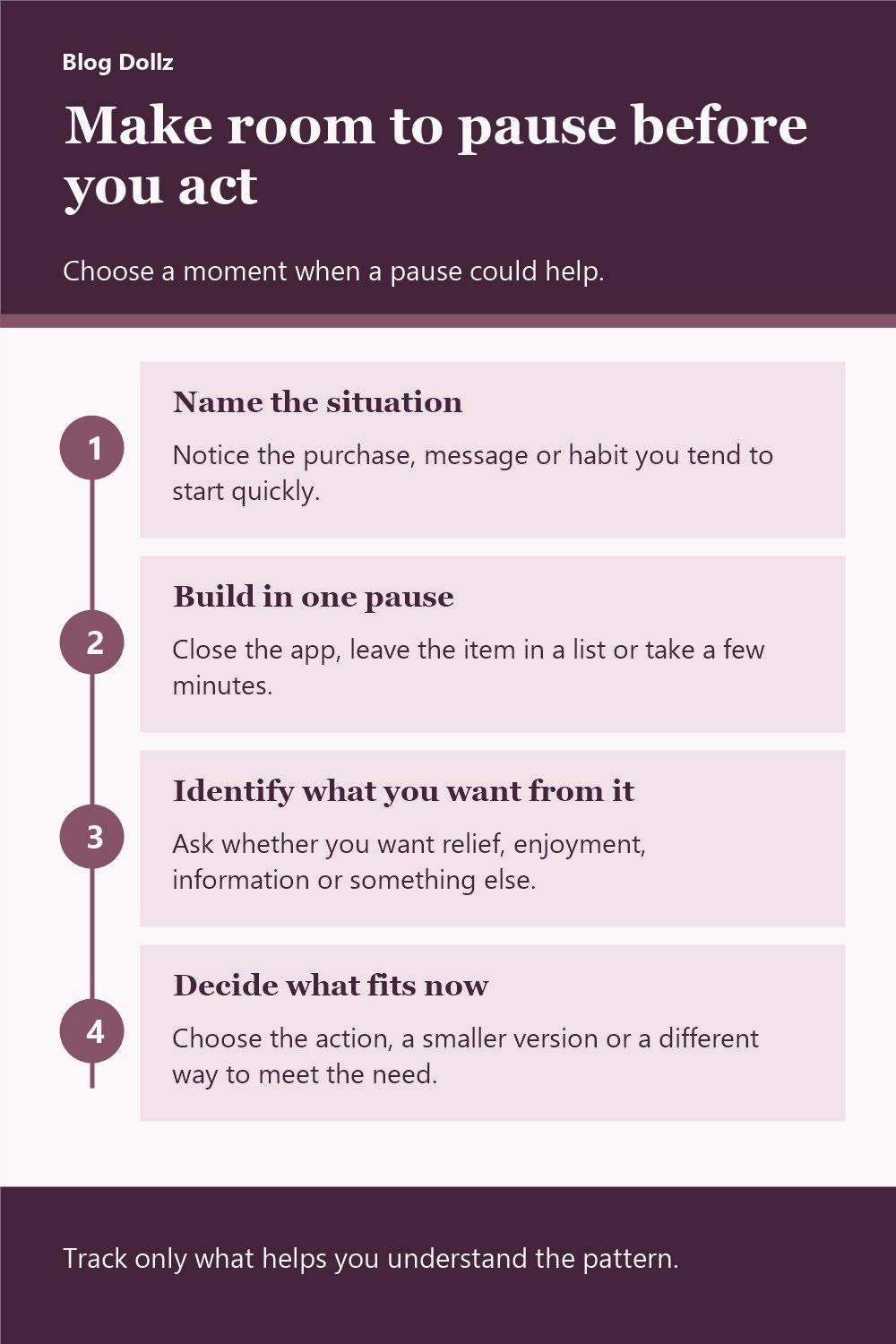
Make room to pause before you act Choose a moment when a pause could help.
- Name the situation Notice the purchase, message or habit you tend to start quickly.
- Build in one pause Close the app, leave the item in a list or take a few minutes.
- Identify what you want from it Ask whether you want relief, enjoyment, information or something else.
- Decide what fits now Choose the action, a smaller version or a different way to meet the need.
Track only what helps you understand the pattern.