

Living in the moment can mean giving a little attention to what is happening now: the conversation you are having, the task in front of you or a quiet pause between responsibilities. You can do this while carrying worries, remembering someone or planning for tomorrow.
You do not have to enjoy every experience or turn a difficult day into a lesson. Start with something small enough to fit the day you actually have, and leave room to change what you need.
On this page
Make room for the day you have
Ask yourself what is taking up your attention. Perhaps you are tired, waiting for news or trying to finish too many things. Naming the situation can help you choose an appropriate next step: a meal, a practical question, some company or a smaller task.
There is room for more than one feeling. You might enjoy a conversation and still miss someone who is absent. You can feel pleased about a new opportunity and uncertain about the work ahead. Neither feeling cancels the other.
Attention moves. If your thoughts wander, you can notice that and return when you want to. You have no obligation to maintain a perfectly calm mind or make this another standard to judge yourself against.
Try a small return to the present
Choose an ordinary activity that feels manageable. You could look at the changing light through a window, notice the texture of a sleeve or listen to a familiar song. Give one detail your attention for a little while, then decide whether you want to continue.
If you prefer something active, focus on one part of a task: rinse a cup, sort a few papers or prepare what you need for your next appointment. You can choose the size of the activity and stop when you need to.
The NHS guide to mindfulness explains everyday awareness and notes that mindfulness does not suit everyone. If paying attention in this way feels uncomfortable, stop or choose another activity. You do not need to push through it to prove you are doing well.
Reduce one distraction
Pick one interruption you can reasonably change. Close an unused browser tab, move a device out of reach for a short conversation or write down a task so you do not have to keep rehearsing it. Keep any alerts needed for care, work or accessibility available.
Try the change for a specific activity, then review it. A useful arrangement should fit your responsibilities rather than require you to be unreachable all day.
Give the past space without forcing closure
Remembering the past can involve affection, grief, regret or unfinished practical matters. You can give those experiences attention without deciding that they must disappear before you are allowed an ordinary moment of comfort.
If something needs action, separate that task from the wider memory. You might arrange a conversation, repair a mistake where possible or ask for support. If no action is available today, you can acknowledge that and return to what is in front of you.
You choose whether forgiveness has a place in your life. Caring for yourself today does not require forgiving someone, resuming contact or finding a positive reason for what happened. When painful memories are difficult to manage, consider support from someone you trust or a qualified professional.
Give future concerns a practical place
Planning is part of looking after your present needs. Write down the concern, the information you need and one action you can take. “Check the appointment time tomorrow morning” gives a worry a practical destination.
Some questions will remain uncertain. You might choose a time to review them when you expect new information, while keeping today’s plan modest. If a new deadline or urgent need appears, adjust the plan accordingly.
You can prepare for a possible problem without rehearsing every version of it. Ask what would be useful now and what can wait. A plan can remain flexible as your circumstances change.

Choose attention, connection or rest
If you want company, make a manageable invitation: a short call, a shared meal or some quiet time together. Ask what works for the other person too. Presence does not require an elaborate outing or constant availability.
Solitude can also be a valid choice. You may need privacy, a quieter environment or time with an interest of your own. Staying connected to life includes noticing those preferences and keeping limits around relationships that feel unsafe or exhausting.
Keep a memory if you want to
A photograph, a few written words or a story shared later can mark something you value. You can also let an experience remain unrecorded. Ask before photographing or sharing another person, and leave room to enjoy what is happening without documenting all of it.
Choose the next few minutes
Pick one thing that fits: attend to a need, notice an ordinary detail, finish a small task or contact someone you want to hear from. You can return to your wider concerns afterwards. A moment of attention can be worthwhile even when the rest of the day remains complicated.
Read the infographic in text
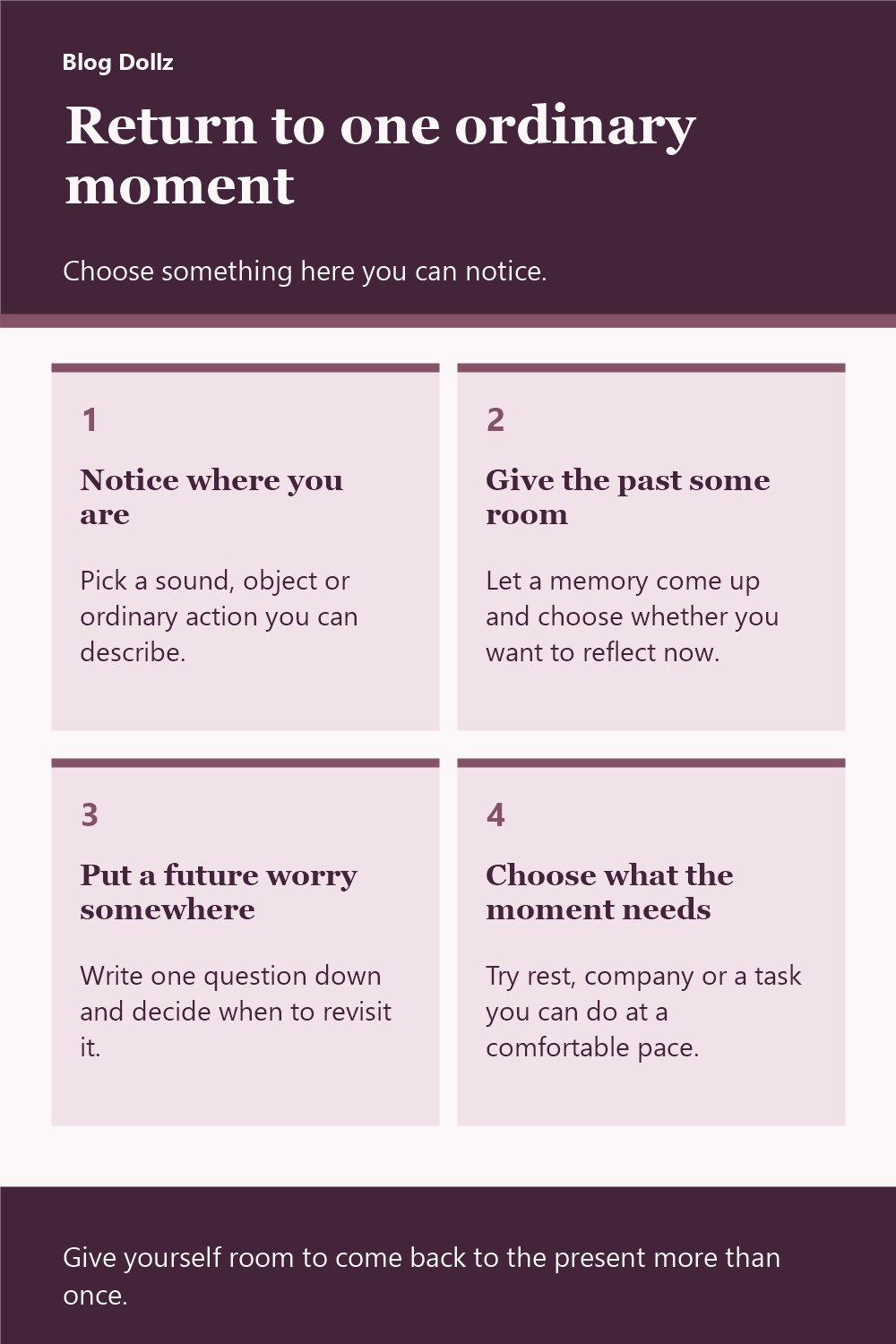
Return to one ordinary moment Choose something here you can notice.
- Notice where you are Pick a sound, object or ordinary action you can describe.
- Give the past some room Let a memory come up and choose whether you want to reflect now.
- Put a future worry somewhere Write one question down and decide when to revisit it.
- Choose what the moment needs Try rest, company or a task you can do at a comfortable pace.
Give yourself room to come back to the present more than once.