

Knowing a partner’s password or having access to their phone doesn’t give you ongoing permission to read their messages. If you feel tempted to check, pause long enough to name the question you’re trying to answer.
Look at what raised the concern
I often give relationship advice online and offline, including to people in long-distance relationships. I’ve heard from many people who checked a partner’s messages after being given access for another reason. Write down what actually happened and what you’re afraid it means. A change in routine might be worth asking about even if you don’t know the reason for it.
Ask directly when it feels safe
Choose a time you can both talk. Start with the change you noticed and a practical question. “We’ve missed a few calls lately. Is there a time that works better for both of us?” If the issue is an agreement about exclusivity, ask about that agreement plainly.
Decide how to handle privacy from here

If you checked without permission, stop. Where it’s safe, acknowledge what happened, take responsibility for your choice and ask how your partner wants to handle future access. If it’s your account and you’re concerned about privacy, review account access from a device you trust.
Take monitoring or threats seriously
If someone pressures you for access, tracks your activity or threatens to retaliate, consider speaking with a trusted person or a support service before making changes they may notice. In the U.S., the National Domestic Violence Hotline can help you think through options.
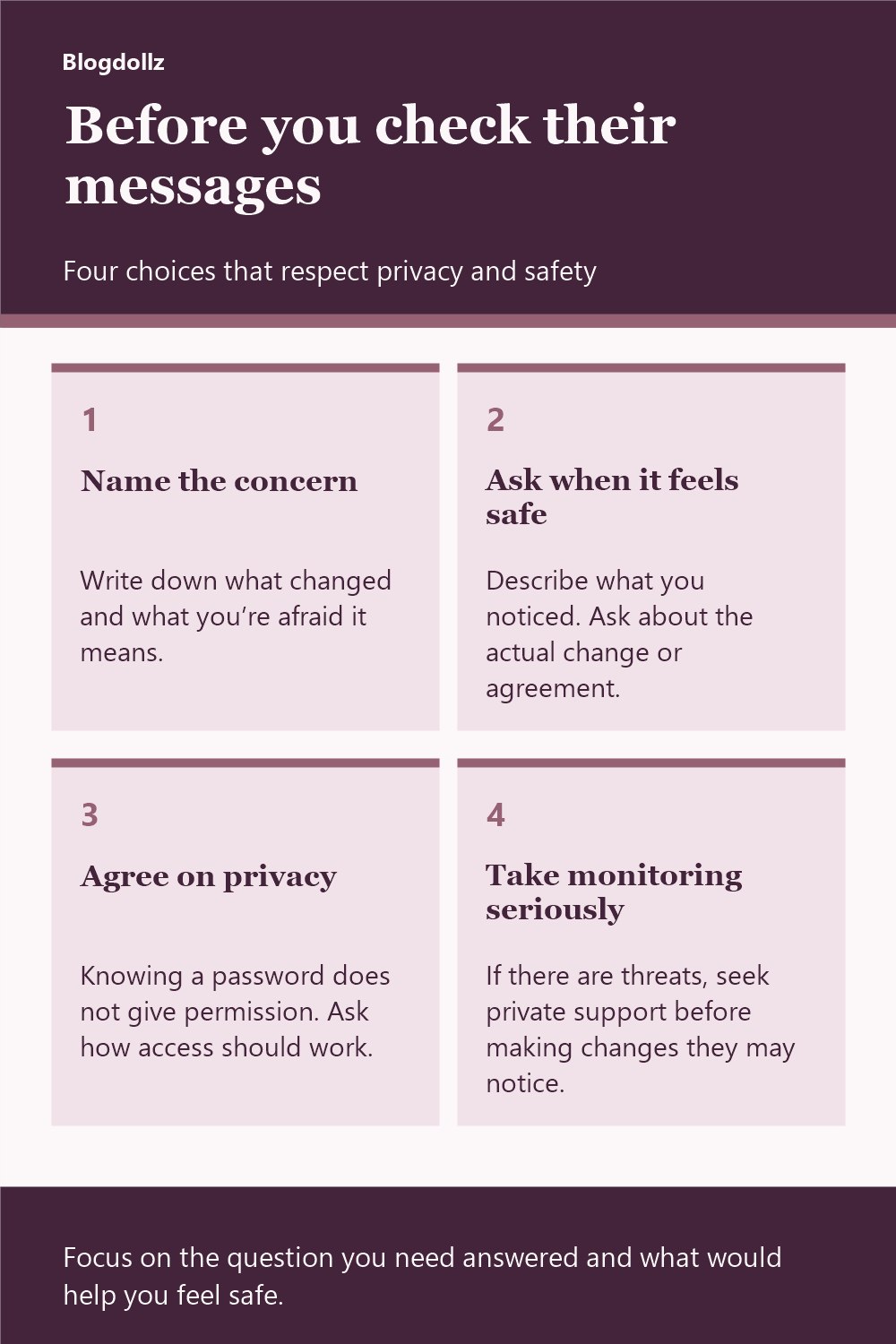
Read the infographic in text
Before you check their messages
- Name the concern Write down what changed and what you’re afraid it means.
- Ask when it feels safe Describe what you noticed. Ask about the actual change or agreement.
- Agree on privacy Knowing a password does not give permission. Ask how access should work.
- Take monitoring seriously If there are threats, seek private support before making changes they may notice.
Focus on the question you need answered and what would help you feel safe.