

I would work every waking moment if I didn’t set aside time to rest. If you find yourself squeezing in one last task long after you meant to stop, try planning a stopping point before the workday gets away from you.
On this page
Give the break a start time
Pick a stopping point you can recognize, such as closing the laptop at six or taking a walk after a meeting. A calendar reminder can help if you tend to lose track of time. If you can, give coworkers a way to identify what needs a reply before the next day.
Leave enough time to settle
 A short break may help between tasks. After a demanding day, give yourself a longer stretch if you have the option. Notice whether your evening leaves you ready for sleep or whether you need to step away from work a little earlier.
Decide what helps you switch off
A game, a book, time outdoors or a meal with family can all feel restorative. Pick an activity you look forward to. If a screen keeps bringing you back to email or work chat, mute those alerts while you rest.
Check how the plan worked
At the end of the week, ask which break you kept, what interrupted it and how you felt afterward. If you missed the same break repeatedly, move it or ask for help with the task that kept taking its place. Rest can be worth protecting even when it makes no difference to what you get done.
Read the infographic in text
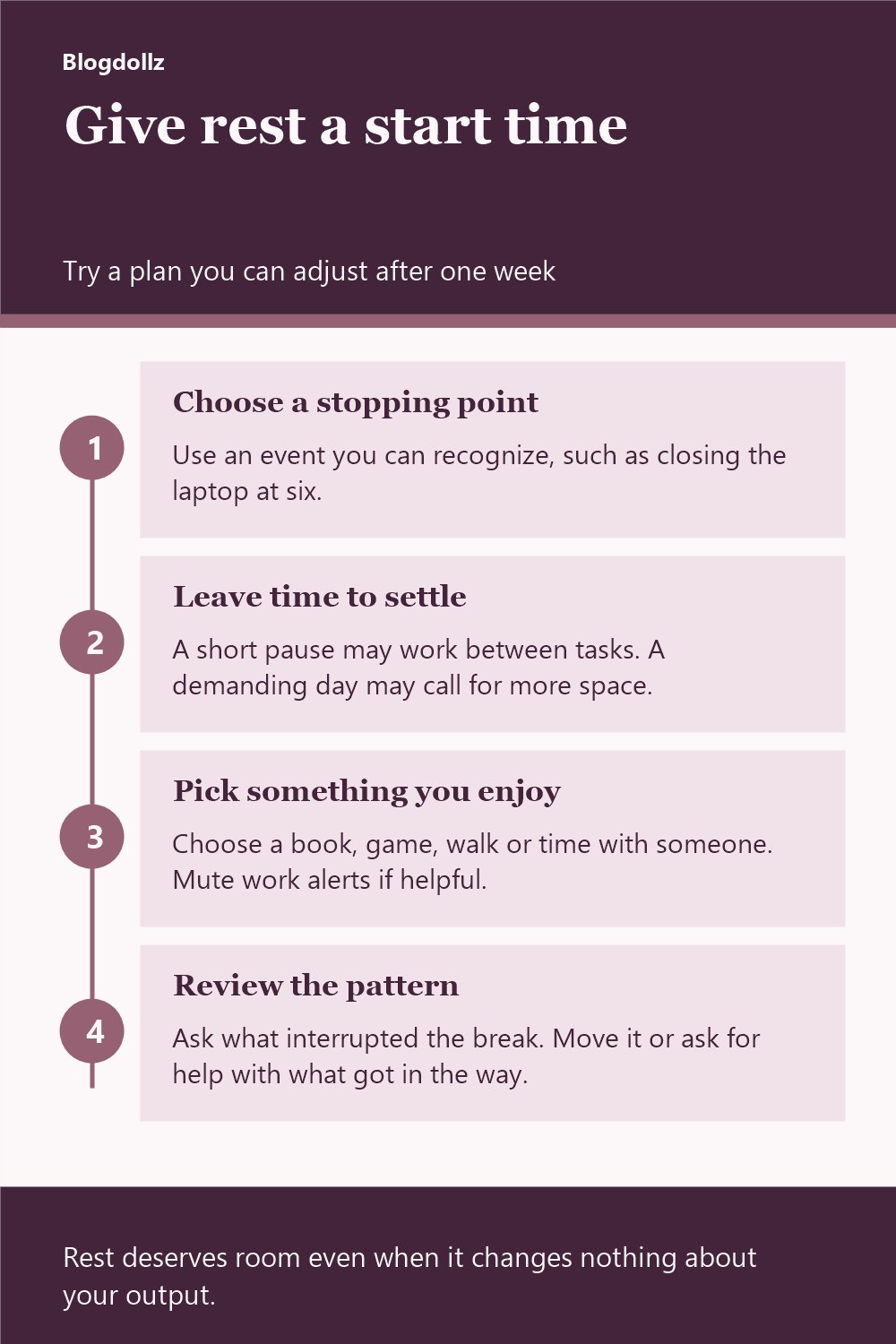
Give rest a start time
- Choose a stopping point Use an event you can recognize, such as closing the laptop at six.
- Leave time to settle A short pause may work between tasks. A demanding day may call for more space.
- Pick something you enjoy Choose a book, game, walk or time with someone. Mute work alerts if helpful.
- Review the pattern Ask what interrupted the break. Move it or ask for help with what got in the way.
Rest deserves room even when it changes nothing about your output.