

Wanting to stop thinking about someone does not mean you can switch off affection or erase memories on command. After a breakup or an unreturned attraction, a familiar song, photograph or quiet evening may bring the person to mind again.
You can decide how to respond without treating the thought as an instruction to contact them or proof that you belong together. Start with the habits and practical needs you can attend to now.
On this page
1. Name the thought without following it
Try a plain description: “I am remembering our trip,” or “I am wondering whether they miss me.” This names what is happening without turning uncertainty into a conclusion about their feelings.
You do not have to argue with every thought or punish yourself for having it. Ask whether there is something useful to do now. If there is no question you can actually answer, return to an ordinary task or activity you chose.
If you want to send a message, consider its purpose and the other person’s contact limits. Missing someone does not entitle you to a reply. Where contact is unwelcome, give that boundary priority over the wish for reassurance.
2. Choose how to handle reminders
Notice which routines keep bringing you back to the person: checking a profile, rereading messages or asking friends for updates. You could mute an account, move photographs out of immediate view or ask friends to stop relaying news.
These can be temporary, practical choices. You do not have to destroy keepsakes, block someone in every circumstance or prove that you have stopped caring. If you share responsibilities, keep necessary communication separate from checking for signs of affection.
Choose a change small enough to try. For example, put the conversation archive away for an evening and plan something else for the time you usually spend reading it. Afterwards, consider whether that arrangement helped you spend your time as you wanted.
3. Keep memories in context
A good memory can remain meaningful without showing that the whole relationship was workable. Recall the wider situation too: what each person wanted, the agreements that were or were not kept and why contact or the relationship ended.
You do not need to replace a painful event with an imagined happy version. Rehearsing a different ending does not establish that it happened or that the other person will change. Keep reflection separate from rewriting the facts.
If you catch yourself making a broad judgement such as “Nobody else will ever care about me,” consider a more grounded statement: “I miss this person, and I do not know what my future relationships will be like.” The NHS offers further guidance on reframing unhelpful thoughts. You do not need to force a positive feeling for reflection to be worthwhile.
4. Give your day another point of attention
Pick something connected to your present needs: a meal, a manageable household task, an interest you have neglected or time with a friend. The aim is to participate in your own day, rather than build a life designed to impress your ex.
Make the plan specific and flexible. “I will ask a friend whether they want a short catch-up this week” is more workable than requiring yourself to become sociable every evening. Include rest and accessible activities that suit your circumstances.
Dating someone new is optional. You do not owe another person a performance of being ready, and a new relationship need not be used to distract from the last one. You can wait, reconsider or keep your attention elsewhere.
5. Make room for support and your own pace
Talk with someone who can listen without encouraging monitoring, revenge or an unwanted reunion. You can ask for company or practical help without needing to explain every memory.
If thoughts or distress are interfering with sleep, daily tasks or your ability to function, consider a qualified professional. Avoid exercises that deliberately intensify a painful memory if they leave you feeling overwhelmed; individual support can help you consider what is appropriate.
There is no guaranteed technique or deadline for no longer feeling love. A thought returning does not make the day a failure. You can acknowledge it, respect the other person’s boundaries and choose one action that belongs to your life now.
Read the infographic in text
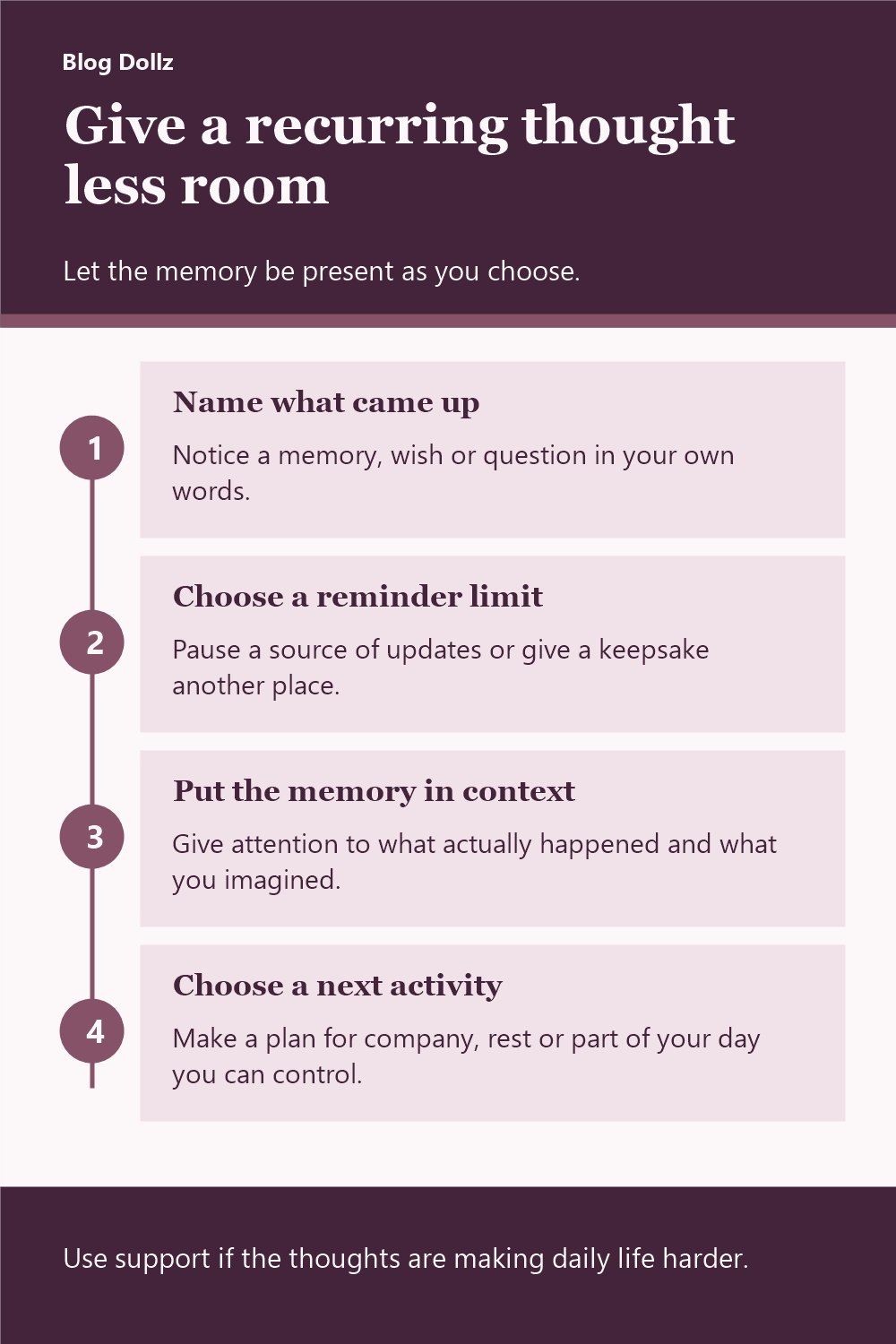
Give a recurring thought less room Let the memory be present as you choose.
- Name what came up Notice a memory, wish or question in your own words.
- Choose a reminder limit Pause a source of updates or give a keepsake another place.
- Put the memory in context Give attention to what actually happened and what you imagined.
- Choose a next activity Make a plan for company, rest or part of your day you can control.
Use support if the thoughts are making daily life harder.