

You can love other people and receive their care while struggling with how you see yourself. You do not need to feel confident, agree with every part of your past or become completely independent before you deserve kindness.
These 20 ideas turn “love yourself more” into choices you can try. They are a menu, not a daily checklist. Choose one that fits the day you are having, and change it if it adds pressure.
On this page
- Know what matters today
- Give a clear answer
- Use comparison as a question
- Make one moment easier to attend to
- Notice a specific ability
- Choose something pleasant without earning it
- Describe a difficulty accurately
- Make a proportionate repair
- Allow forgiveness to take time
- Leave room for different opinions
- Make enjoyment small enough to happen
- Let gratitude coexist with difficulty
- Keep a modest record of progress
- Name a feeling before judging it
- Respond to your body’s needs
- Return to an interest without a performance goal
- Choose an approach that respects your safety
- Include yourself in everyday kindness
- Ask for a specific kind of support
- Leave something unfinished and rest
1. Know what matters today
You do not need a complete account of who you are. Name one preference, responsibility or value that matters in this situation. You might want a quieter evening, time with a friend or a fairer division of work. Start there.
2. Give a clear answer
If a request exceeds your capacity, offer an answer you can keep: “I cannot do Saturday, but I can help on Tuesday.” You may still feel guilty. Take that feeling seriously without automatically changing your answer.
3. Use comparison as a question
When someone else’s life looks appealing, ask what specifically you want: company, security, recognition or more choice. Their photograph does not show every part of their circumstances. Choose a useful question for your life rather than a verdict about your worth.
4. Make one moment easier to attend to
Put a task down for a few minutes, turn down an unnecessary notification or tell someone when you can listen properly. Attention varies with stress, health and competing demands. Getting distracted does not mean you do not care.
5. Notice a specific ability
Think of something you can actually describe: explaining a process, preparing a meal or remembering a friend’s preference. You can appreciate an ability without being the best at it. Skills can also be learned, adapted or shared.
6. Choose something pleasant without earning it
A favourite snack, a comfortable seat or music you enjoy can belong in an ordinary day. Pleasure does not have to follow an achievement. Choose what is available and comfortable for you, without making food or spending a test of self-discipline.
7. Describe a difficulty accurately
Separate the event from a sweeping judgment. “I did not reply” gives you something to address; “I am a terrible friend” tells a much larger story. Consider what happened, what got in the way and what you want to do next.
8. Make a proportionate repair
If you made a mistake, identify the part you can put right. You could correct information, apologise or agree a new plan. Taking responsibility does not require repeated self-punishment, and another person is allowed time to respond.
9. Allow forgiveness to take time
You do not have to reach forgiveness on a schedule, for yourself or anyone else. You can work on repair and future choices while still feeling regret. Forgiving someone does not require renewed contact or access to your life.
10. Leave room for different opinions
Someone’s disappointment or dislike does not settle your value. Consider useful feedback without accepting every demand. If a conversation becomes insulting, you can pause it or choose a different setting, with support where needed.
11. Make enjoyment small enough to happen
Try a few pages of a novel, a game, a familiar programme or a short visit. It need not become a hobby, a purchase or a productive use of leisure. You can stop when your energy or interest changes.
12. Let gratitude coexist with difficulty
You might appreciate a kind message and still feel lonely. If writing down something good is helpful, try it; if it becomes pressure to deny a problem, leave it aside. Having something to appreciate does not cancel a need for change.
13. Keep a modest record of progress
Note a task you completed, a question you asked or a limit you maintained. Include the help and circumstances that made it possible. A record can make your effort easier to see without turning every day into a score.
14. Name a feeling before judging it
Try “I feel disappointed” or “I am worried about tomorrow.” You do not need to decide immediately what it means or act on it. Consider whether you want information, company, space or practical help.
15. Respond to your body’s needs
Look at what is manageable now: food, rest, warmth, accessible movement or healthcare you need. Adapt plans around disability, illness, pain and caring responsibilities. A day when you need more help is not a day when you deserve less care.
16. Return to an interest without a performance goal
Choose something you are curious about, including an old interest you left behind. Borrow materials, try a small part or join a beginner session if that suits you. You can enjoy an activity without becoming skilled or sharing it publicly.
17. Choose an approach that respects your safety
You can ask for respectful treatment or help to address a problem. If someone uses threats, control or intimidation, consider private support from a trusted person or specialist service before confronting them. Responsibility for harmful behaviour belongs to the person causing it.
18. Include yourself in everyday kindness
Being considerate can include your own time and capacity. You can offer support while saying what you are able to do. Other people also have limits; a request for help leaves room for an honest answer.
19. Ask for a specific kind of support
Say what would help: listening, company at an appointment or sharing a task. If persistent self-criticism is affecting daily life, discuss it with a qualified professional. You do not have to solve it alone before seeking help.
20. Leave something unfinished and rest
Pick a reasonable stopping point when you can. Write down the next step if it helps you leave the task for later. Rest may be brief or interrupted; it still counts. You can revise tomorrow’s plan around the resources you actually have.
The NHS guide to low self-esteem offers more about noticing harsh beliefs, considering evidence and finding support. You can begin with a fairer description of one difficult moment rather than trying to feel positive about everything.
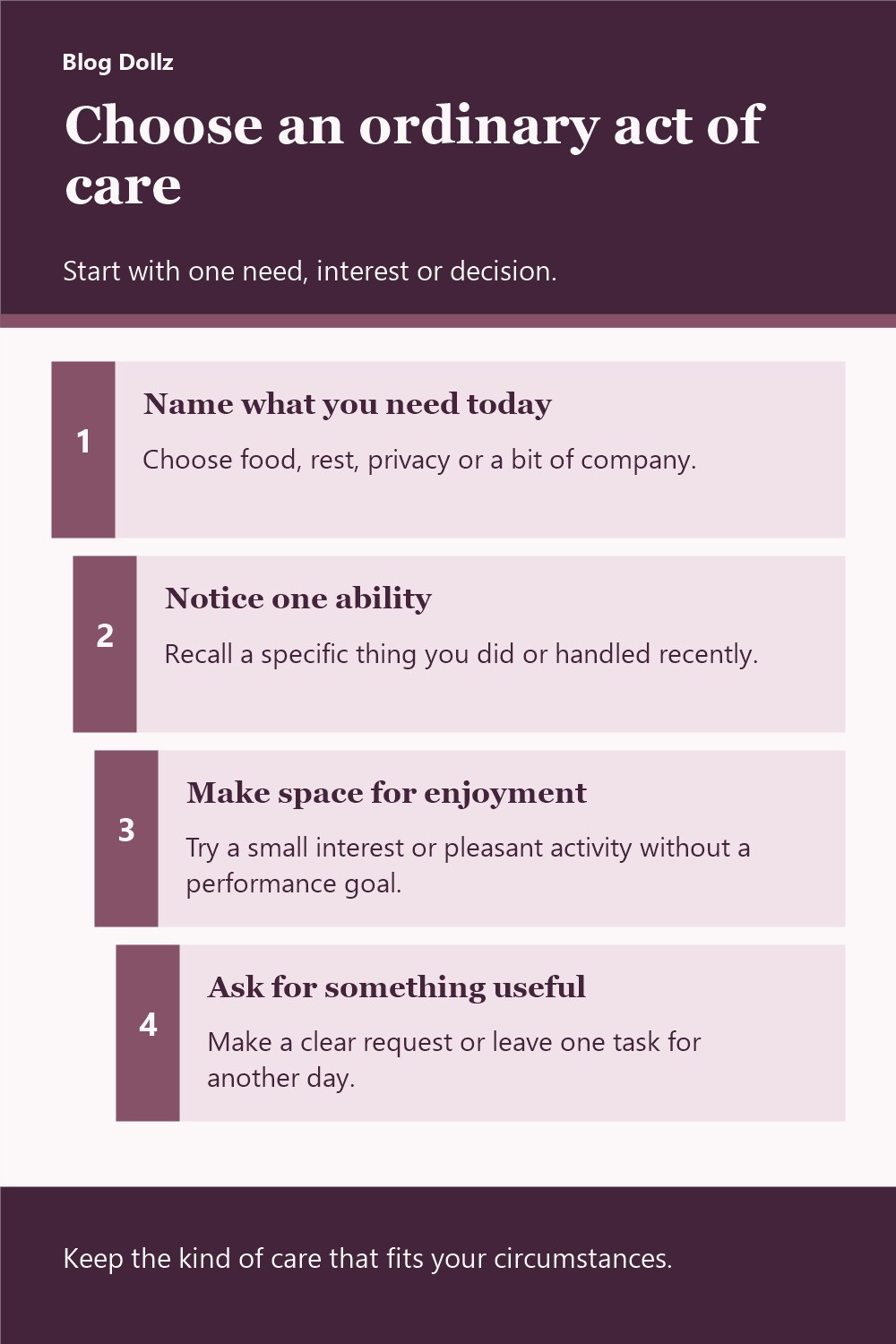
Read the infographic in text
Choose an ordinary act of care Start with one need, interest or decision.
- Name what you need today Choose food, rest, privacy or a bit of company.
- Notice one ability Recall a specific thing you did or handled recently.
- Make space for enjoyment Try a small interest or pleasant activity without a performance goal.
- Ask for something useful Make a clear request or leave one task for another day.
Keep the kind of care that fits your circumstances.