

Some people use aura language to describe their sense of personal energy, the atmosphere around them or a spiritual connection. If an aura-cleansing ritual is meaningful to you, it can mark a pause after a demanding day or help you think about the boundaries you want to keep.
Begin with your own experience: what feels draining, what needs attention and what would be comforting now? You can explore symbolism without deciding that a difficult feeling proves your energy has been damaged or that another person has attacked you.
On this page
Decide what the ritual means to you
Ask what you hope to mark: the end of a workday, a quieter moment after an argument or time to reflect before a decision. A clear intention can keep the practice connected to your actual needs.
You might use the word “cleansing,” or prefer “reset,” “reflection” or “rest.” Choose language that feels supportive rather than a test of whether you are spiritually clean. Different people can give the same ritual different meanings.
Notice practical needs alongside spiritual meaning
Feeling drained may follow too many demands, noise, poor rest or a difficult conversation. Look at what happened before interpreting the feeling. You may need food, a comfortable setting, help with a task or time away from an argument.
If you feel affected by someone’s mood, ask what behaviour you noticed and what you need next. Their anger can be unpleasant without becoming evidence that you have absorbed it or caused it.
Choose a small, comfortable ritual
Use something familiar and manageable: tidying a small surface, changing into comfortable clothes or sitting beside a plant while naming what you want to set aside for the evening. Keep the activity within your energy, access and budget.
A usual wash can mark a transition if you enjoy it. A special salt or product is optional; there is no need to treat ordinary discomfort as psychic debris that must be removed. Avoid adding an uncomfortable activity simply because someone says the ritual will otherwise fail.
Finish with a practical intention, such as “I will leave non-urgent messages until tomorrow,” or “I will ask for help with that task.”
Keep imagery and meditation optional
You may enjoy imagining a colour, listening to a familiar sound or sitting quietly. Let the practice stay comfortable. Keeping your eyes open and noticing an ordinary object is another option if inward focus is unpleasant.
You do not need to produce a colour, hold a fixed gaze or look at bright sunlight. Our guide to aura beliefs, colour and eye comfort offers a way to explore symbolism while respecting what you can actually observe.
Turn protection into a clear boundary
Think about a limit you can describe in everyday terms. You might shorten a draining conversation, ask for advance notice before visits or set aside a quiet period when you are unavailable for non-essential requests.
If it is safe to say so, try: “I can listen for a little while, but I cannot discuss this all evening.” You can care about someone while having limits on your time and attention.
Threats or controlling behaviour deserve practical safety support. A spiritual ritual does not make you responsible for preventing someone else’s harmful choices.
Leave room for feelings and your own choices
Sadness, anger and uncertainty can remain after a ritual. Their presence does not mean you performed it incorrectly or lack self-love. You can notice the feeling and consider what support or action would be useful.
Forgiveness is a personal choice. It does not need to be a condition of feeling safe, receiving care or maintaining a boundary. Our guide to forgiveness, trust and repair after betrayal separates those decisions.
You can also decline an interpretation that frightens or pressures you. Another person’s spiritual language does not override your consent or require you to continue an unwanted relationship.
Review what helped and seek support when needed
Ask what changed in practical terms. Did you get a quieter moment, identify a need or keep a limit? Keep the parts you found useful and adapt the rest. You can stop a practice that adds fear, expense or pressure.
If distress persists or affects daily life, consider speaking with a qualified professional about the experience itself. Counselling can address feelings and circumstances; you do not need to ask a clinician to confirm an aura blockage.
For an ordinary difficult moment, our guide to a gentle reset when your mind feels overloaded offers adaptable options. Spiritual reflection and practical care can sit alongside each other while leaving you free to choose what helps.
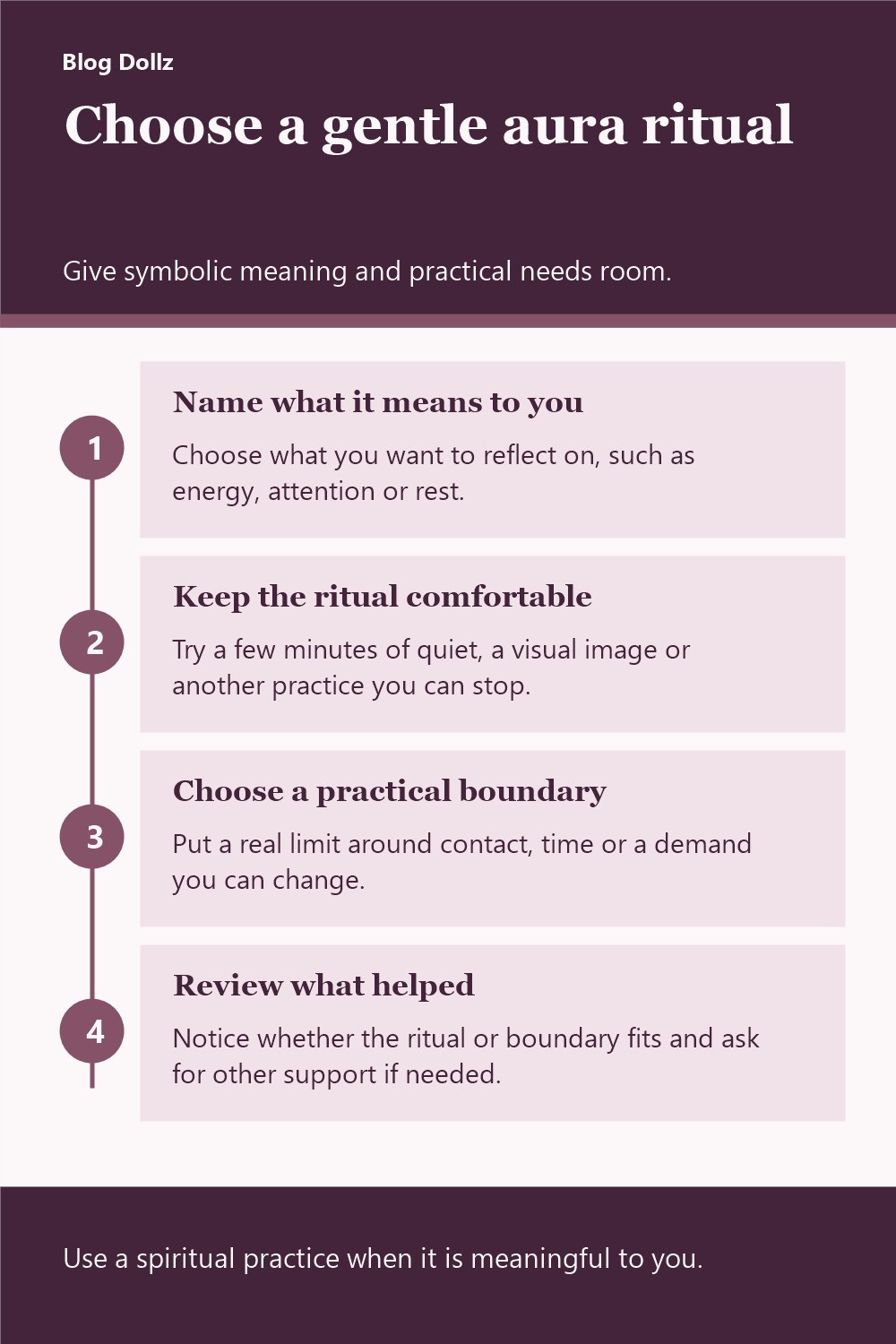
Read the infographic in text
Choose a gentle aura ritual Give symbolic meaning and practical needs room.
- Name what it means to you Choose what you want to reflect on, such as energy, attention or rest.
- Keep the ritual comfortable Try a few minutes of quiet, a visual image or another practice you can stop.
- Choose a practical boundary Put a real limit around contact, time or a demand you can change.
- Review what helped Notice whether the ritual or boundary fits and ask for other support if needed.
Use a spiritual practice when it is meaningful to you.