

A photograph, a friend’s update or seeing your ex with a new partner can bring a fresh wave of feelings. You may be surprised by the reaction even if you did not want to get back together. You can acknowledge that it hurts without making it a verdict on your value.
Their new relationship is information about their current life, not a reliable account of everything they felt before. Focus on what the news changes for you in practice and which parts you do not need to keep following.
On this page
- Separate the news from the story you are adding
- Choose which updates you want to receive
- Keep the new partner out of a comparison contest
- Plan for shared events and unexpected encounters
- Keep necessary arrangements separate from dating updates
- Give your reaction somewhere useful to go
- Return attention to something in your own life
- Ask for more help when you need it
Separate the news from the story you are adding
Write one sentence describing what you actually know: “My ex is dating someone,” or “A friend told me they attended an event together.” Then notice the interpretation: “I meant nothing,” or “I should be over this already.” Those are different statements.
You may never know the complete timeline or your ex’s private feelings. You can deal with a specific broken agreement if there is evidence of one, while leaving unanswered questions unanswered. A new partner is not proof of your inadequacy.
Choose which updates you want to receive
Consider muting an account, changing what appears in your feed or asking friends to stop sending photographs. You do not need to make a public announcement or explain the decision repeatedly.
Try: “I do not want updates about their dating life. Please tell me only if something affects plans we share.” If someone forgets, repeat the request or change the subject. Ordinary curiosity does not make you a bad person, but you can notice when checking is leaving you more distressed.
Keep the new partner out of a comparison contest
It can be tempting to compare appearance, achievements or the amount of attention someone receives. A profile cannot explain a relationship, and collecting more details may give you more material to judge yourself against.
You do not owe the new partner a friendship or a conversation about your former relationship. Respect their privacy and avoid posting accusations or private information. If there is a concrete issue to address, seek appropriate support about that issue rather than investigating their life.
Plan for shared events and unexpected encounters
If you may see your ex at work, a gathering or a local event, decide what would make attendance manageable. You might go with a trusted person, arrive separately or leave earlier. Declining an optional event is also a choice.
Prepare a brief line if wanted: “Hello. I hope you enjoy the evening; I am going to join my friends.” You can be civil without hugging, smiling on demand or discussing the breakup. You are also allowed to excuse yourself without a conversation.
If there are threats or concerns about safety, a specialist service can help you consider the situation. Do not treat an uncomfortable encounter and an unsafe one as the same problem.
Keep necessary arrangements separate from dating updates
Shared parenting, housing, work or belongings may still require contact. Where safe and practical, keep communication to a specific question, relevant information and the arrangement needed. You do not have to include personal news in those exchanges.
If a new relationship affects a genuine shared responsibility, name the practical issue rather than asking for emotional reassurance. For example: “We need to confirm who is collecting the children and when.” Seek suitable professional advice when an agreement or responsibility needs clarification.
Give your reaction somewhere useful to go
Ask a willing friend for the kind of support you need: a walk, a listening ear or help getting through an event. You do not have to be happy for your ex, and you do not have to turn your hurt into hostility.
Choose a listener who respects privacy and does not feed you more unwanted details. If talking keeps becoming a replay of every update, you can agree to change the subject after a while or spend time together doing something ordinary.
Return attention to something in your own life
Pick a current need that has little to do with the new relationship: getting an essential task done, arranging company or returning to an interest. Keep the plan small enough to fit your energy and resources.
Your recovery does not have to match your ex’s visible timeline, and dating someone new is not a required milestone. If feelings for your ex remain, our guide to making room for life alongside lingering feelings covers contact habits and reminders.
Ask for more help when you need it
If distress persists, worsens or interferes with sleep and daily responsibilities, consider speaking with a qualified professional. Describe the particular situations that are difficult and the support you want.
Our guide to a gentle reset when your mind feels overloaded offers optional ways to pause. You do not need to prove that you have moved on before you deserve care, privacy and a life with room for your own choices.
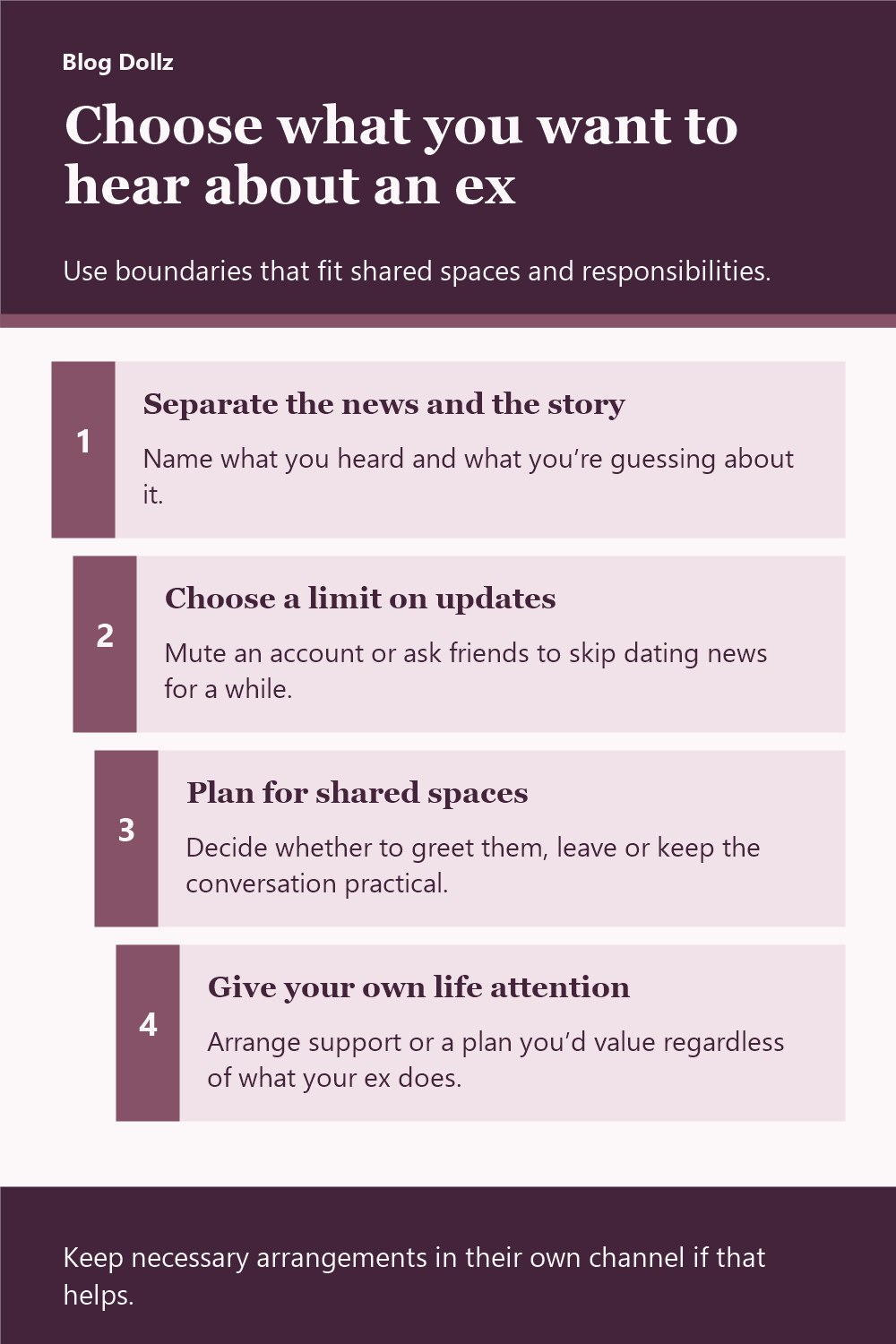
Read the infographic in text
Choose what you want to hear about an ex Use boundaries that fit shared spaces and responsibilities.
- Separate the news and the story Name what you heard and what you’re guessing about it.
- Choose a limit on updates Mute an account or ask friends to skip dating news for a while.
- Plan for shared spaces Decide whether to greet them, leave or keep the conversation practical.
- Give your own life attention Arrange support or a plan you’d value regardless of what your ex does.
Keep necessary arrangements in their own channel if that helps.